
HOW CANNABIS LOUNGE ROLLBACKS ARE AFFECTING PUBLIC HEALTH
After decades of protecting workers and the public from secondhand smoke, clean indoor air protections are under threat. As communities and states enter 2026, the intersection between cannabis and smokefree air protections will need to remain on the radar of tobacco prevention staff and advocates alike. In 2025, legalization of adult-use cannabis was considered in four states—Pennsylvania, Hawaii, New Hampshire, and Louisiana; none of the states have passed the legislation. However, it is likely that additional states will consider legalizing cannabis in 2026.
INCREASED RISK OF ROLLBACKS
In just four years, since 2021, 11 states have legalized adult use. This increase in legalization is creating a number of challenges, including increased exposure to secondhand cannabis smoke and increased pressure by the cannabis industry to expand indoor spaces where people can smoke and vape the products.
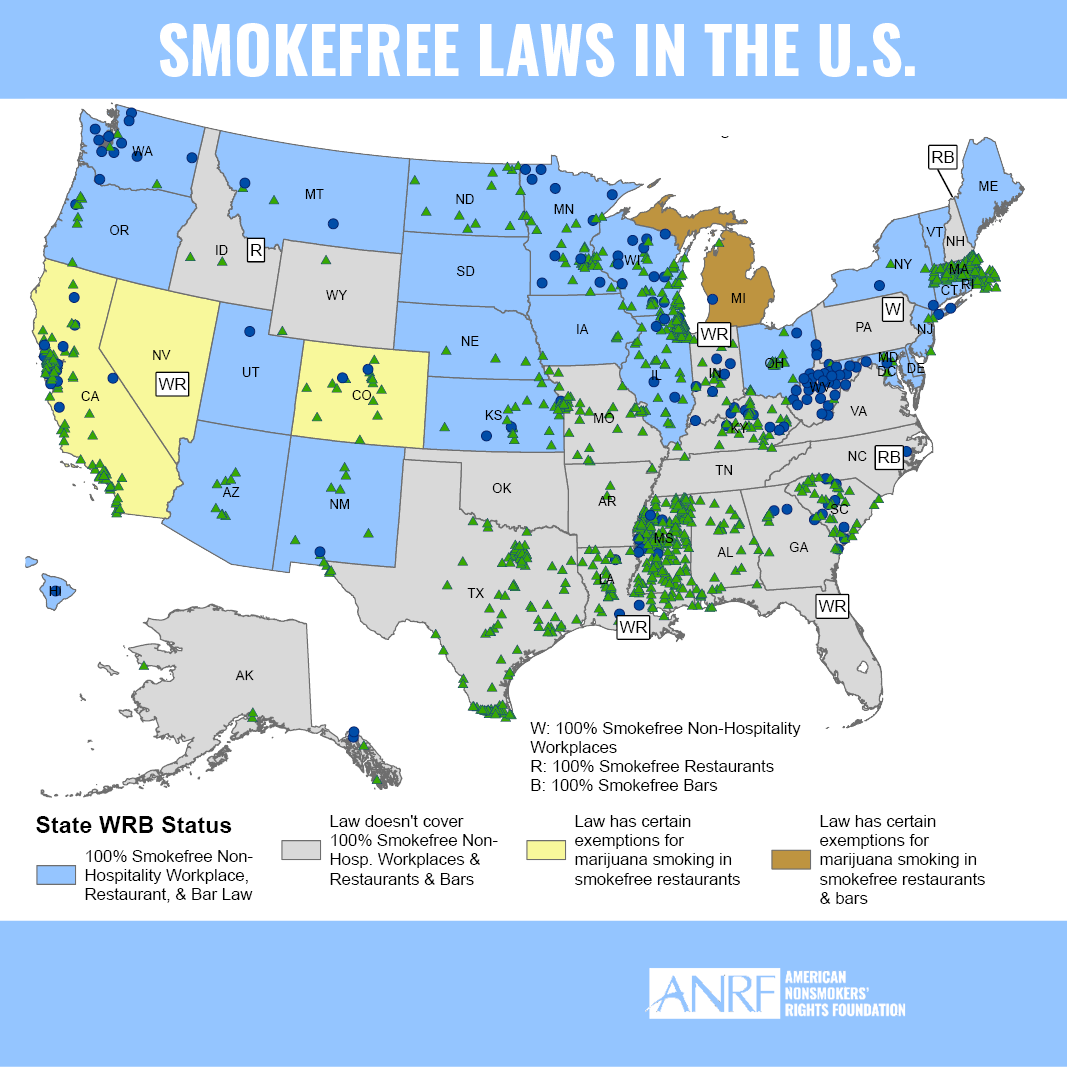
Unfortunately, several states including California and Colorado have weakened their smokefree laws with exemptions to allow local jurisdictions to permit smoking and vaping cannabis in certain indoor environments. We expect to see more of this legislation in 2026 at the state level, and of local jurisdictions considering taking advantage of their unfortunate ability to expand where smoking is allowed indoors.
WEAKENING PROTECTIONS
In 2025, California implemented AB1775, which allows cities and counties to permit cannabis retailers to operate as restaurants and cafes, where events are hosted, food may be served, and workers are exposed to secondhand smoke on the job. Cannabis hospitality venues as permitted by AB1775 are now open in Coachella, National City, Cotati, and West Hollywood, while additional communities including Oakland, Sacramento, and Santa Cruz County have decided to allow smoking inside cannabis lounges, but they do not currently permit the food and events components.
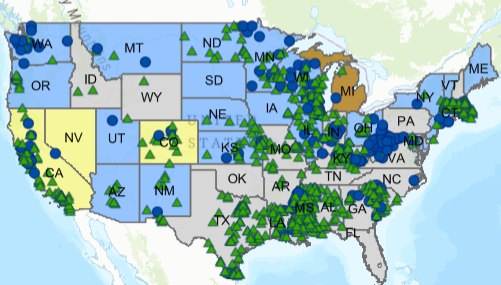
This year also saw New York introduce a bill whose language mirrors California’s new law and the Massachusetts Cannabis Control Commission will vote in December on regulations for cannabis consumption venues that are even more permissive and problematic, which could allow smoking in cannabis lounges not only at cannabis retailers, but they could also be “located within an existing Non-Cannabis Entity,” meaning that a cannabis smoking lounge could potentially be inside a restaurant, bookstore, theater, yoga studio, or any other venue.
WHO IS AT RISK?
Rolling back longstanding, popular smokefree laws to allow marijuana smoking indoors not only increases secondhand smoke exposure among workers, patrons, and people in adjacent buildings, it also creates and exacerbates significant health consequences. After decades of progress at expanding smokefree protections and reducing disparities, we do not want to see backwards movement where more people are breathing toxic smoke-filled air inside cannabis retailers, lounges, and hospitality venues. There is also the real concern that these rollbacks could renormalize smoking and vaping in indoor environments, as well as create a new class of workers who are forced to breathe secondhand smoke on the job again, after decades of having clean indoor air and healthier worksites.
CANNABIS USE RATES RISING SWIFTLY
Recent research highlights the growing concern around the impact of cannabis on public health. Dr. Jonathan Caulkins with Carnegie Mellon University joined ANRF’s Marijuana and Secondhand Smoke Office Hours in September to discuss his research on the increase in cannabis use rates in the U.S. over the last 40 years. The research found that people in the U.S. are using cannabis more frequently now, with 18 million people using cannabis on a daily or near-daily basis in 2022, which is twenty times higher than in 1979. One of the study’s most interesting findings is that more people in 2022 reported using cannabis frequently than people who reported drinking alcohol frequently.
PUBLIC HEALTH AT RISK
These changes raise interesting questions about how the sharp increase in cannabis use may impact the tobacco prevention environment, such as potentially changing the level of public support for smokefree air and increasing pressure on policymakers to expand spaces for cannabis smoking and vaping from both the public and the cannabis industry.
A study published in September from researchers at the University of California at San Francisco found that inhaling cannabis increases a person’s risk of asthma and COPD, including people who have never smoked tobacco. This significant new finding was the first time that cannabis smoking was looked at separate from tobacco smoking, and it adds to the body of research on the health risks of cannabis.
Read more about the health effects of secondhand marijuana smoke exposure: Marijuana Fact Sheet
LOOKING AHEAD FOR 2026
As more states consider cannabis legalization, we will only see more pressure to weaken our hard-won protections. With more Americans using cannabis daily or near-daily, and the science confirming the respiratory health risks, the stakes are high.
Please let us know if you see activity in your community that will make exemptions for new lounges and indoor smoking. After decades of smokefree progress we cannot go backwards!
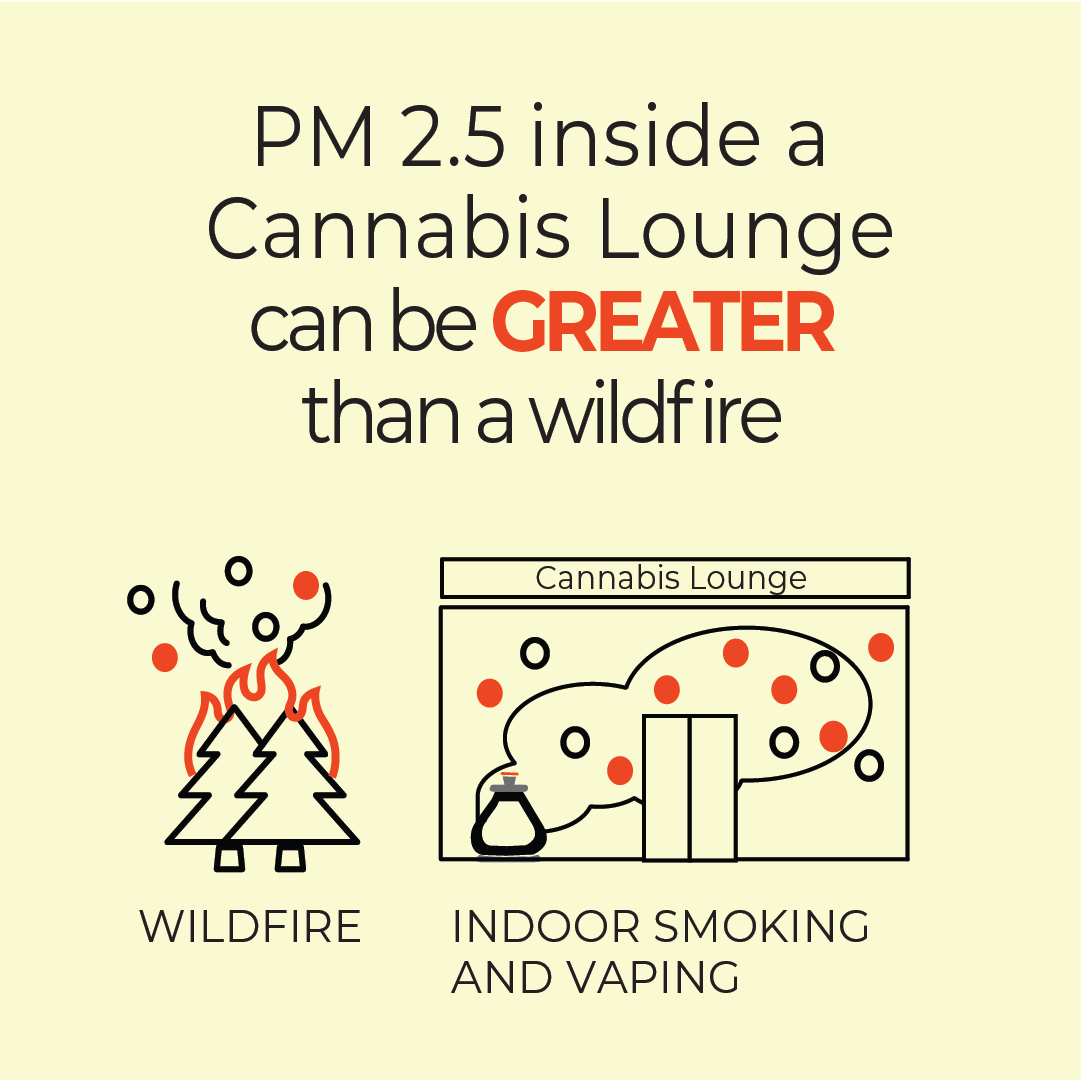
See our new infographic to understand marijuana secondhand smoke and vape.
Poster can be printed at 11×17. Click to open and save.

See the science behind this infographic: Citations here.
This article originally published in December, 2025, UPDATE, ANR’s newsletter.
Sign up for our monthly email news or join us to receive UPDATE.