Bronson Frick
Watching The Social Reckoning, the movie about Facebook, got me thinking about a challenge we face in smokefree advocacy and across public health.
The film portrays a company rewarding content that gets people to react and share, even when it fuels outrage and division. What happens when the things that get the most attention are very different from the things that make our daily lives better?
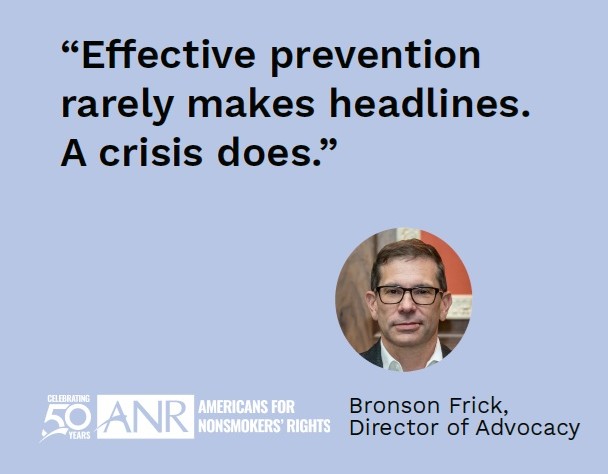
Effective prevention rarely makes headlines. A crisis does. Years of steady work to keep a problem from happening are much easier to overlook.
Smokefree air protections are a good example. Getting a law passed can take years of organizing and public education. Even something as straightforward as moving smoking outdoors faces industry interference, dirty tricks, and manufactured controversy intended to create doubt and delay in the policy process. But once a law takes effect, breathing smokefree air becomes an ordinary part of going to work, eating at a restaurant, or enjoying a night out. People expect it.That is success.
But prevention can become politically vulnerable precisely because it works so well that people stop noticing it.
A worker finishes a shift without breathing secondhand smoke. A traveler checks into a hotel room that doesn’t reek of smoke. A family comes home to a smokefree apartment. Despite airline and tobacco industry dire warnings that people would stop flying if they couldn’t smoke, smokefree flights are now taken for granted.
These everyday improvements are thanks to community advocates and organizations working hard to make their communities healthier and more livable. ANR members help sustain that work. Smokefree air did not just happen by accident, rather hard work shifted norms over time.
Sustaining the fight
The financial interests working against smokefree progress have not gone away. Tobacco companies profit by keeping people smoking and selling as many cigarettes – and increasingly other nicotine products – as possible. The industry and its allies have long fought smokefree protections that threaten those sales. Unsurprisingly, there are also growing reports of the tobacco industry now using AI to target potential users in online content and algorithms.
Most people who smoke want to quit, but that can be much harder when surrounded by the sight and smell of smoking. Allowing smoking indoors keeps those reminders present and makes it easier to light up on a whim. “Smoke ’em if you got ’em” serves the tobacco business well. People trying to quit deserve environments that support their efforts.
U.S. adult cigarette smoking has fallen below 10%, reaching 9.9% in 2024, according to CDC. But a low smoking rate does not protect someone who has to breathe another person’s smoke. In a bar, casino, apartment building, or hotel with indoor smoking, everyone in the building becomes a secondhand smoker. Tobacco companies collect the profits while others bear the health risks.
This is why prevention still matters after decades of progress. It is also why the administration’s efforts to cut public health capacity, including disease surveillance and effective commercial tobacco prevention programs, are so shortsighted. Cutting prevention programs and data today while leaving communities and exposed workers to pay later.
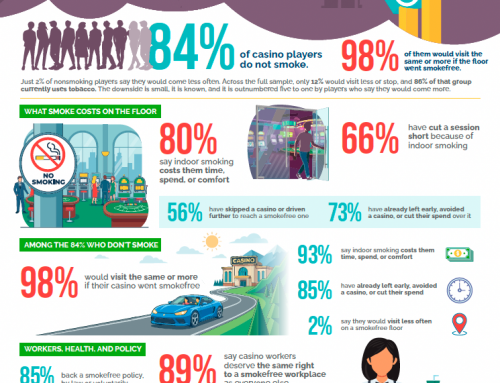
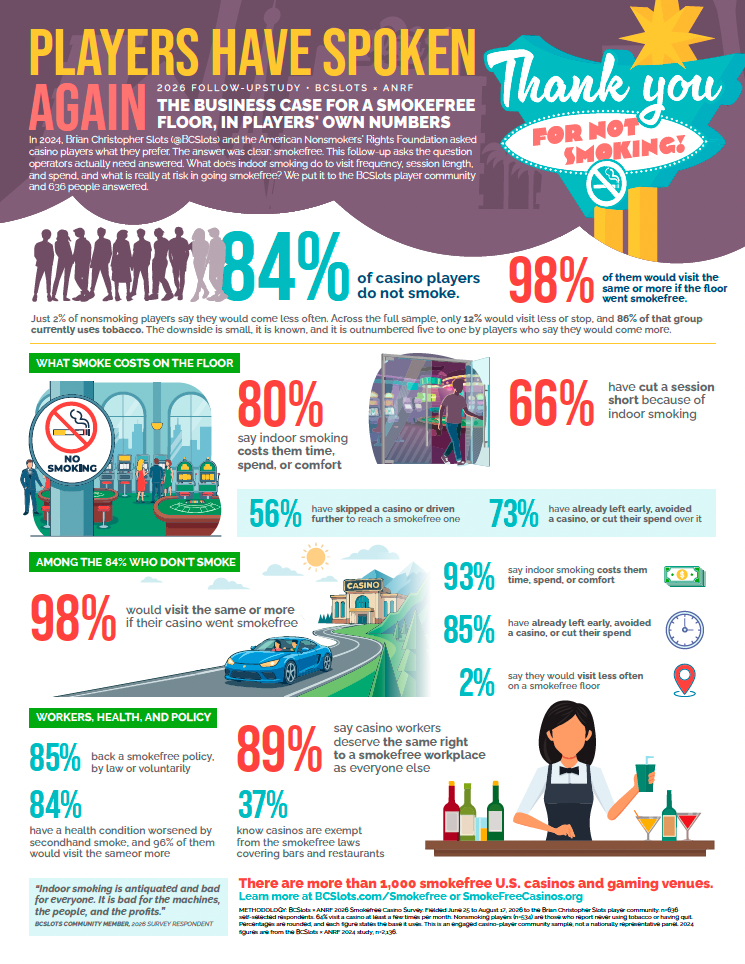
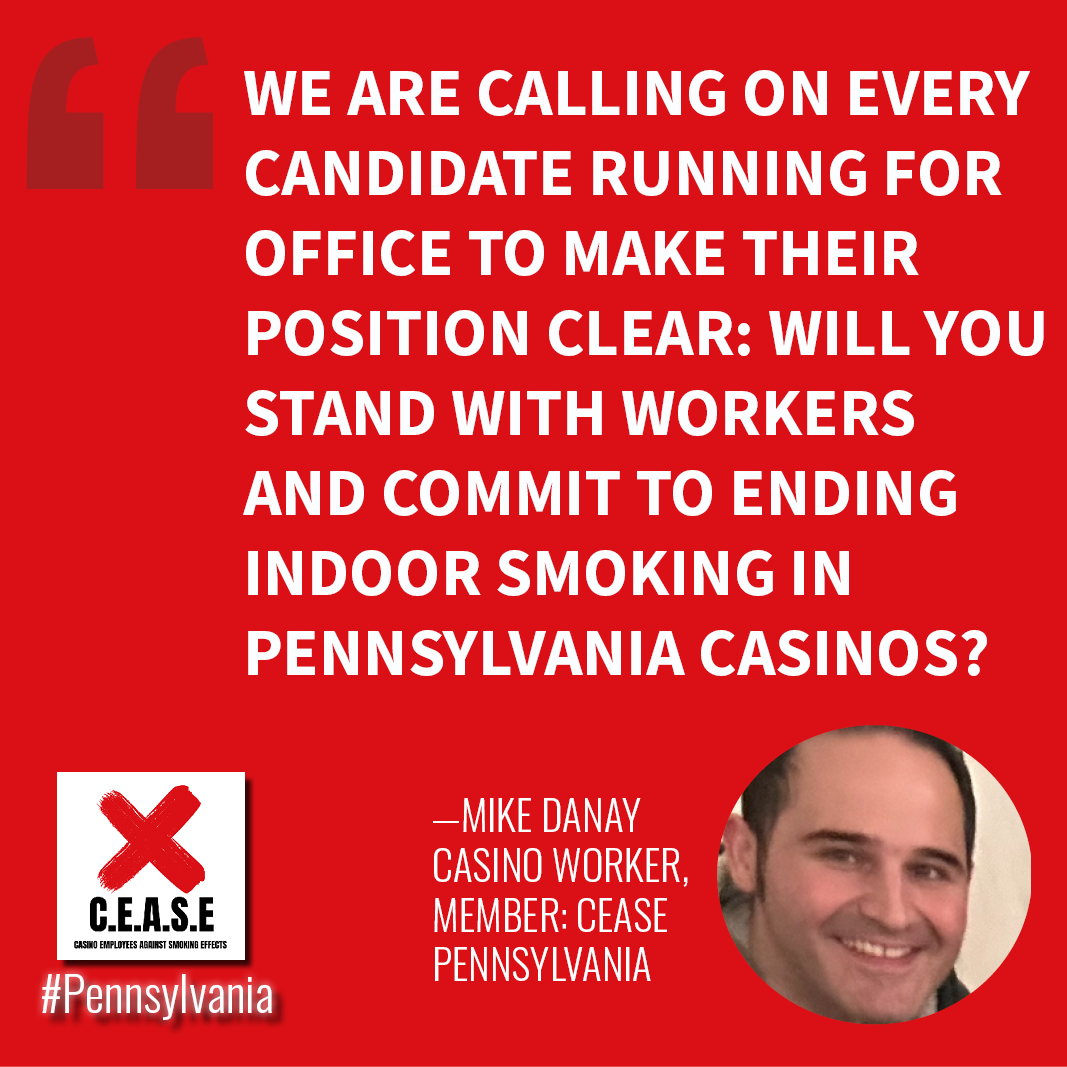
Support for smokefree air is strong even in casinos, where industry interference has delayed protections for decades. In the 2026 Brian Christopher Slots–ANRF survey, 98% of respondents from the BCSlots player community said they would visit just as often or more often if casinos were smokefree. That demand deserves more visibility.
There is a cost to delaying protections, too. Faced with the political clout of tobacco and other big money special interests, lawmakers may see inaction as the safer choice. But safer for whom? Every delay means more shifts worked in secondhand smoke and more secondhand smoke for millions of Americans visiting these venues. Leaving an exemption in place is a policy choice with consequences for people’s health. Lawmakers often need encouragement and feedback to put people’s health ahead of the tobacco industry’s constant lobbying pressure even to simply maintain longstanding smokefree protections.
For example, Detroit Metro Airport’s decision to remain smokefree rather than add a cigar lounge is a recent success. Community advocates, health organizations, and residents spoke up against the proposal, and the airport authority withdrew it. For travelers, the airport simply remained smokefree. Behind that everyday protection was sustained advocacy.
Small actions have big impacts
We can help make the value of prevention more visible by sharing our experiences, thanking businesses, and speaking up in our communities before protections are weakened.
In online reviews and surveys for venues such as airports, hotels, cruise ships, casinos, and bars, call out secondhand smoke. Say if it made you leave early, spend less, or decide not to return. Also, thank businesses when their smokefree policies make your experience better. Businesses like casinos look to see if customers mention secondhand smoke despite not being asked about it in surveys.
Be the squeaky wheel with lawmakers, too. Email your local and state lawmakers about why smokefree air matters to you. Ask them to close gaps and reject rollbacks. They will hear from tobacco industry front groups and their allies seeking exemptions that leave people exposed. Will they hear from you?
As ANR marks 50 years, visit our 50 Stories for 50 Years series to see how people in the smokefree movement have created lasting change. Send us your stories, too. Tell us what changed in your community, who helped make it happen, or why you are still working for protection.
Thank you to our members, community advocates, and partner organizations for making this progress possible. Secondhand smoke is not part of the cultural heritage we want to pass down to the next generation. Thank you for helping make community prevention successes visible by speaking up. Together, we can protect what we have achieved and close the gaps for those still waiting for their right to breathe safe, smokefree air.