

2026 Message from the President and CEO

Berkeley, CA—On March 1, 1976, a small group of people gathered to discuss a radical idea: indoor spaces where no one smoked, where people could breathe clean air. At the time, smoking was at an all-time high, it was the norm to smoke everywhere. Movie theaters were filled with smoke. Office workers lit cigarettes at their desks. Restaurants didn’t even have smoking sections—yet—you could light up as you were eating. Passengers on buses, trains, and airplanes ended up with hair and clothes smelling like smoke. There was little research on the health or economic consequences of cigarette smoking, or the effects of secondhand smoke on nonsmokers. As these founders met and started to organize, they didn’t just advocate for change—they created a blueprint for it.

The impact of what they started—and what we have built together—is immense. Millions of lives have been saved from cancer, heart disease, heart attacks, emphysema, asthma, sudden infant death syndrome, and all the other ailments triggered or exacerbated by secondhand smoke. The U.S. spends approximately $225 billion each year treating smoking-related illness—every smokefree workplace law is a step toward reclaiming those dollars for prevention instead of treatment. ANR’s emotional and economic impact, built one advocate at a time over 50 years, is profound.
ANR’s work isn’t finished, and we need your help to continue to put ANR’s 50 years of knowledge to work to save more lives and more dollars; to prevent more illness, loss and grief. The fight isn’t over. There are still too many people exposed to secondhand tobacco smoke, and many are now also facing exposure to cannabis and cigar smoke. The more success we achieve, the harder our opponents in the tobacco, cigar, cannabis, and casino industries push back.
Here we recap the lessons and impact of the last 50 years, and why ANR’s experience and expertise are so vital to close the remaining gaps and finish the job of saving lives from secondhand smoke.
Lessons learned: Personal stories are powerful.
One key lesson from 50 years of ANR’s advocacy is that one person speaking up—sharing their story about the challenges of working in a smoke-filled environment—can and did make a huge difference. Sharing personal stories with neighbors, co-workers, and family helped break the silence of others who also disliked being exposed to tobacco smoke. This was the birth of a powerful grassroots movement that was willing to challenge the status quo about when and where people could smoke, along with taking on a powerful industry. The power of the people proved stronger than the people in power, although that’s often difficult to remember when Big Tobacco and its allies were and are so well-connected, well-funded, and motivated to protect profits over the health and well-being of people.

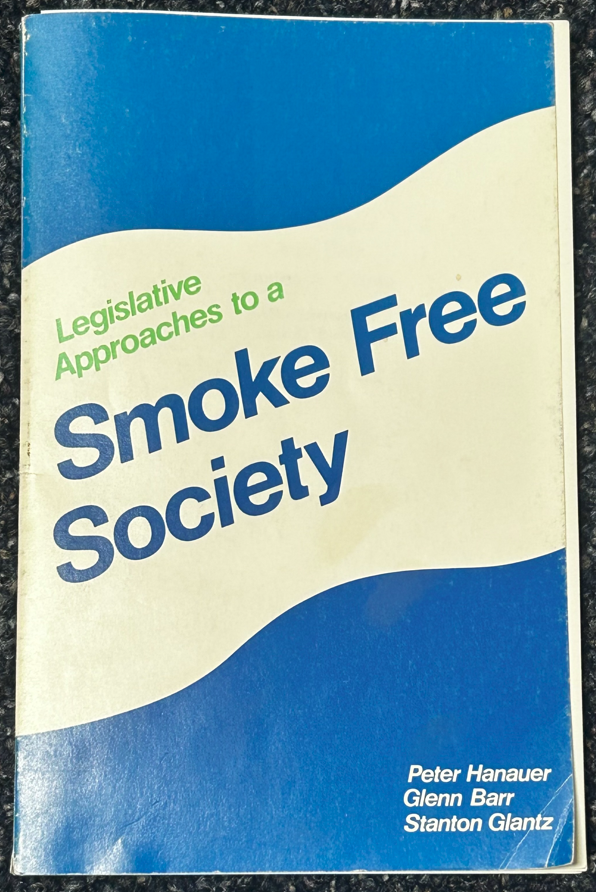
Think and act locally. We also learned that, while the tobacco industry had a great deal of influence at the federal and state level, it had far less in local municipalities, which led to another key lesson: local leads the way. These and many other lessons we learned in our first 10 years were compiled into ANR’s first advocacy guidebook, “Legislative Approaches to a Smoke Free Society.” In this same tradition, we are working on a new resource for public health advocates—distilling our lessons learned and proven strategies for advancing community health, from smokefree policies and across other important issues.
Research is vital to changing minds and public policy. Americans enjoy far more smokefree space than they did 50 years ago. But progress started slowly, and research was vital to quickening the pace. In the 1970s and 1980s, there wasn’t strong evidence that secondhand smoke was more than a nuisance to nonsmokers. In 1986, our ability to advocate for what we knew intuitively was best for health and safety emerged with the first Surgeon General’s Report on the health consequences of involuntary smoking. The report made a strong statement that “the simple separation of smokers from nonsmokers within the same air space may reduce, but does not eliminate, exposure of nonsmokers to environmental tobacco smoke.” This emboldened ANR and the broader movement to move away from no-smoking sections and toward 100% smokefree environments. This led to a gold rush of smokefree restaurant laws and paved the way for the smokefree domestic airlines rule adopted 36 years ago, on February 25, 1990. Flying on a smokefree plane was the first time many people experienced a completely smokefree environment—and it built powerful public support for smokefree spaces.
Adaptation and innovation are essential, and success breeds success. ANR has consistently and effectively adapted to an ever-evolving environment as social norms and public expectations changed to demand broader smokefree protections in all indoor spaces. For instance, as more restaurants went smokefree, bar patrons—and more importantly, bar workers—wondered why they were left out of these life-saving policies. Casino workers emerged as another class of workers left out of strong statewide smokefree workplace laws. California was the first state to include gaming in its regulations in 1994, though only card rooms and horse racing tracks. Delaware was the first to include casinos in laws adopted in 2006. “Small but mighty” came through again: Delaware isn’t a large state, but it had an enormous influence on others.
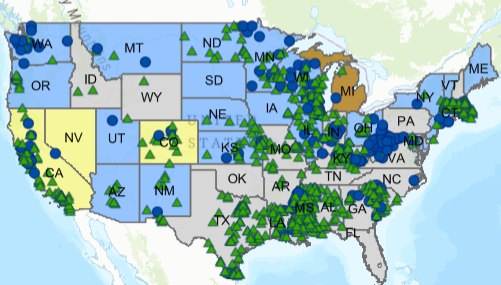
Track and share results. ANR was the first not only to campaign for clean indoor air laws, but also the first to keep track of these innovative laws—first as a list on paper, then in a database. A board member with programming expertise helped develop a searchable database of laws from throughout the nation, which helped advocates share developments in smokefree public policy and helped researchers document the health and economic impact of these laws. The U.S. Tobacco Control Laws Database© has served as a model for other public health law databases. Later, ANR created the first database of Tobacco Industry documents, as well as a Preemption Strike Force, which convened partners across the U.S. to discuss challenges and strategize how to prevent and overturn preemption legislation. ANR compiled stories from real people, first in writing and then on video—powerful tools that changed attitudes and shifted opinions to support smokefree indoor air. More recently, ANR established monthly “office hours” for advocates and partners to discuss the impact of marijuana legalization and maintaining smokefree indoor air.
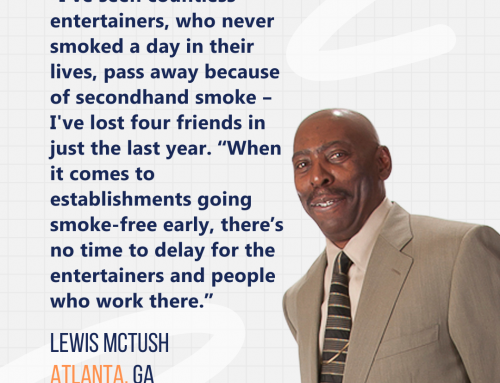
Collaboration is vital. Throughout its history, ANR has prioritized grassroots advocacy and continues to collaborate and strategize with those most affected by unsafe, smoke-filled workplaces—musicians, casino workers, hospitality and lounge workers. The collaboration between ANR’s experts and individuals on the ground is a powerful combination that gets recognition and results. While ANR does its best to share expertise and prepare others to recognize and expose industry misinformation, lies, and “astroturf” groups, the playing field is ever-changing.
OPPORTUNITIES AND THREATS
At this stage in our 50-year history, 62.8 percent of the population is covered by smokefree workplace laws—protected from the disease and cost attributed to secondhand smoke. That also means 37.2 percent remain at risk, still vulnerable to heart disease, cancer, and more in unprotected cities, states, and workplaces. Here is a summary of the opportunities before us and the threats looming in our way.
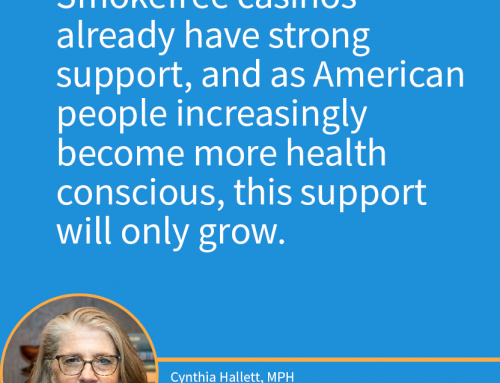
Health and life-saving protection for casino workers
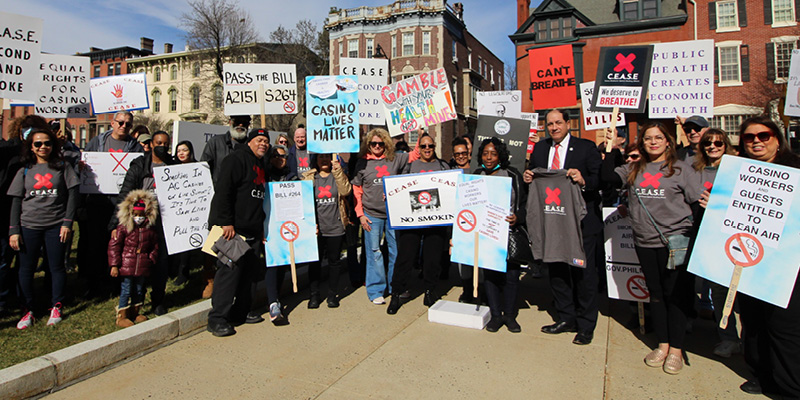
We have a real opportunity to bring smokefree air to New Jersey’s casino workers despite relentless pushback from the casino industry. In addition to ongoing legislative efforts, pressure is building through the courts. The United Auto Workers (UAW) and CEASE (Casino Employees Against Smoking Effects) have sued the state, arguing that the casino exemption from the Clean Indoor Act is unconstitutional. New Jersey’s state constitution specifically recognizes a right to safety. ANR submitted an amicus brief in support of this effort. Following a recent appeals court decision, the case will now go before New Jersey’s Supreme Court—but first it will be remanded back to the lower court for an extraordinary evidentiary hearing, which could lead to expert testimony on the health effects of secondhand smoke as well as a review under oath of the casino industry’s claims about ventilation effectiveness and alleged negative economic impacts of going smokefree. 2026 marks the 20th anniversary of the New Jersey Clean Indoor Act—a law that exempted the over 23,000 casino workers who are still waiting for the basic smokefree protections that everyone else in the state has had for a generation.
Tennessee
We have more opportunities to pass local laws in Tennessee, where Gallatin just adopted a law and others are waiting in the wings. In 1994, Tennessee adopted a law that preempted local control of smokefree laws. Twenty-eight years later, Tennessee partially repealed preemption, reinvigorating the smokefree movement in the state. Nashville, then neighboring Hendersonville, passed a law prohibiting smoking in venues open to those 21 and over.
Threats: The smoking industry and its allies
Big Tobacco has morphed over time. Tobacco used to mean just cigarettes and smokeless products, but it has expanded to include e-cigarettes, heated nicotine products, new smokeless products including Zyn, and flavors extending well beyond menthol. Some tobacco companies have branched into the cannabis market, particularly after marijuana was successfully legalized in Colorado in 2012. Twenty-four states have legalized adult-use marijuana, of which 23 have strong statewide smokefree laws. Proponents are making a full court press to roll back smokefree laws to create special exemptions for cannabis lounges and have succeeded in Colorado and California. Similarly, cigar proponents are pushing for exemptions in cigar lounges. All of these efforts are designed to renormalize smoking and erode smokefree protections.
A shifting federal landscape
The federal government is no longer focused on tobacco as a public health issue, and has dramatically reduced funding for public health initiatives across America’s states and cities. As a result, a leading cause of disease and health care costs—smoking and secondhand smoke—is no longer front and center with our federal health agencies. With the loss of federal resources, research, and direct financial support, ANR must rely on its members, donors, and partners to sustain the movement and continue making progress.
Looking Forward
Change is constant. Shifts in norms and preferences are to be expected—but lately ANR has seen serious shifts in opinion and a distancing from research and facts about the hazards of secondhand smoke, whether from tobacco, cigars, cannabis, or e-cigarette aerosol. We have navigated shifts and challenges before, and we are confident we can adapt to this new landscape.
We can do it! Over the last 50 years, ordinary people have done extraordinary things—secretaries, law book editors, flight attendants, musicians, casino workers, and people like you who care about your community and the health and wellbeing of everyone. The fight continues, and we look forward to hearing your stories, your memories, and your ideas throughout this milestone year.
###
Americans for Nonsmokers’ Rights (ANR), sister organization to the ANR Foundation, is a member-supported, non-profit advocacy group that has been working for 50 years to protect everyone’s right to breathe nontoxic air in workplaces and public places, from offices and airplanes to restaurants, bars, and casinos. ANR has continuously shined a light on the tobacco industry’s interference with sound and life-saving public health measures and has successfully protected 62.8% of the population with local or statewide smokefree workplace, restaurant, and bar laws. ANR aims to create healthy communities by closing remaining gaps in smokefree protections for workers in all workplaces, including bars, music venues, casinos, and hotels. For more information, please visit nonsmokersrights.org and smokefreecasinos.org.
See a timeline of ANR’s 50 Years of Work