Twenty years ago, Westin Hotels & Resorts led a transformation for smokefree hotels.
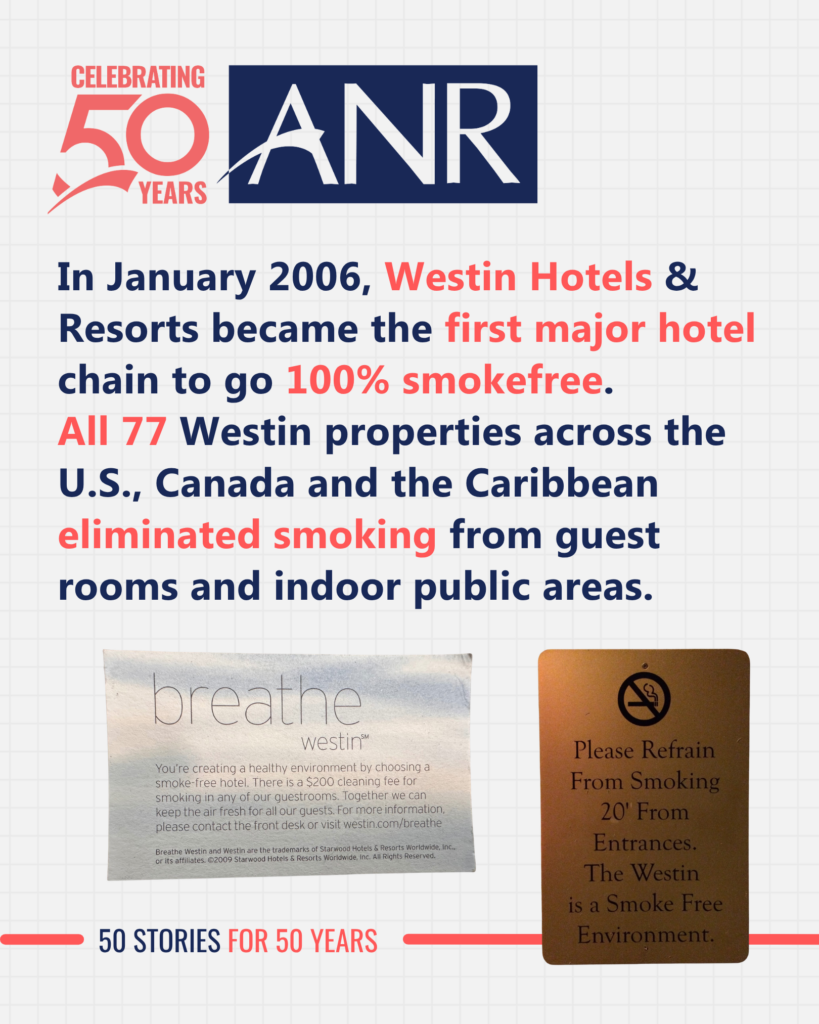
In January 2006, Westin became the first major hotel chain to make all of its hotels in the United States, Canada, and the Caribbean 100% smokefree indoors. Westin was part of Starwood Hotels & Resorts Worldwide at the time. All 77 properties went smokefree, including guest rooms and indoor public areas.
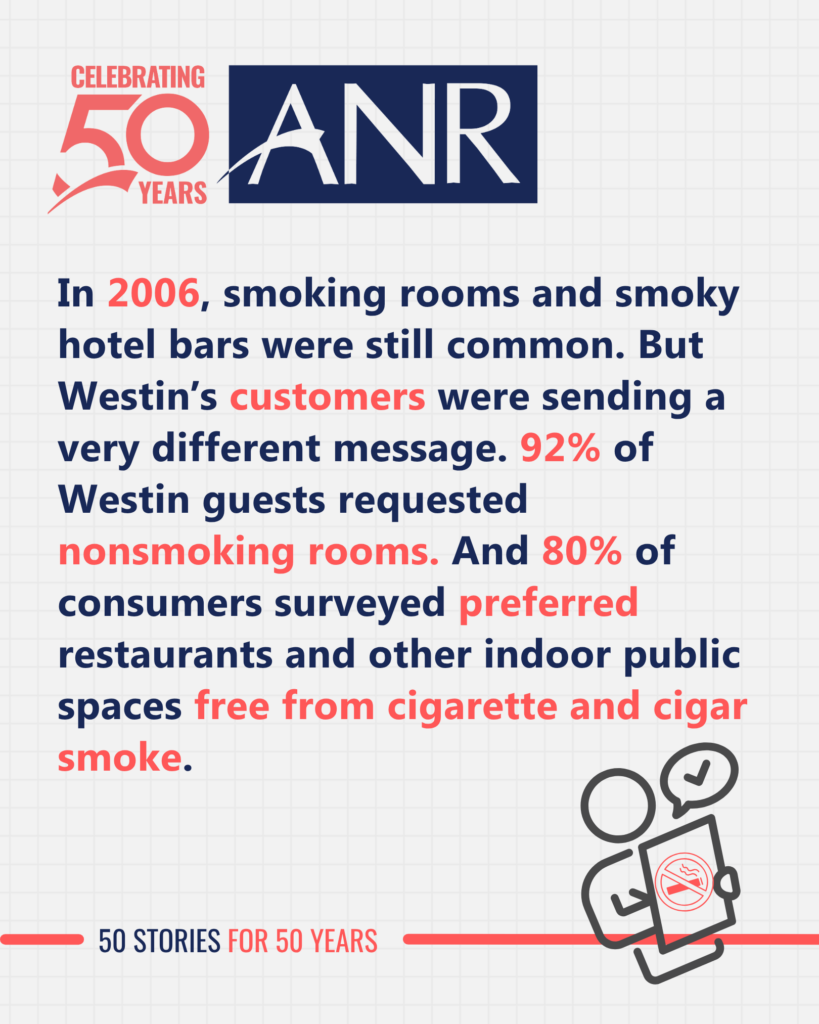
Westin was responding to clear consumer demand. Its own customer data showed that 92% of Westin guests requested a nonsmoking room when traveling and did not smoke elsewhere in the hotel. Westin also commissioned a national poll of 1,054 U.S. adults. It found that 86% agreed that a nonsmoking environment was an important first step toward a healthier environment, and 80% preferred restaurants and other indoor public spaces without cigarette or cigar smoke. Eight Westin properties that were already smokefree were also receiving overwhelmingly positive guest feedback.
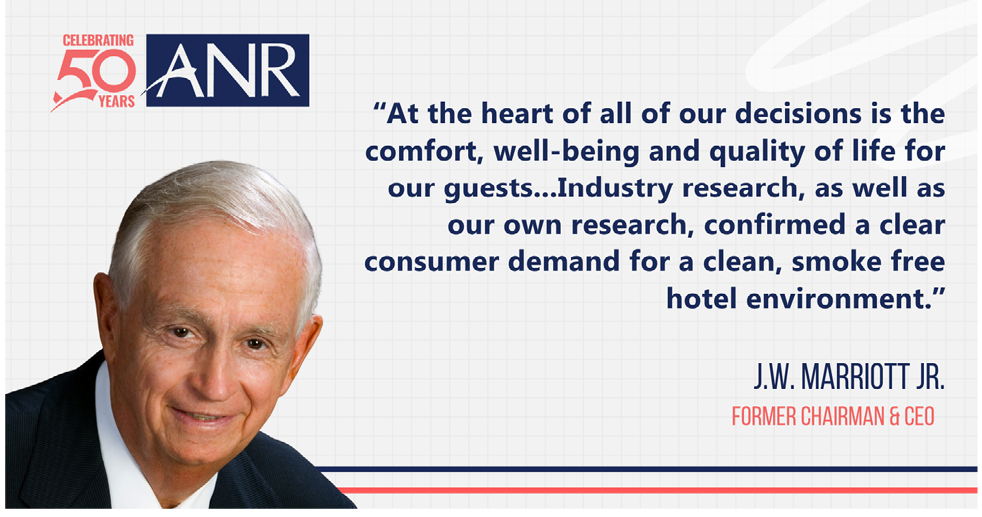
Sue Brush, Westin’s senior vice president at the time, explained the decision: “Industry research, as well as our own research, confirmed a clear consumer demand for a clean, smokefree hotel environment.”
A few months later, Marriott International took smokefree hospitality across its much larger portfolio.
On July 20, 2006, Marriott announced that all of its hotel brands in the United States and Canada would become 100% smokefree. The policy took effect October 16 and covered more than 2,300 hotels and corporate apartments and nearly 400,000 guest rooms.
It applied across Marriott’s portfolio of brands, including Marriott, JW Marriott, The Ritz-Carlton, Renaissance, Courtyard, Residence Inn, SpringHill Suites, Fairfield Inn, TownePlace Suites, and others. Guest rooms, restaurants, lounges, public spaces, and employee work areas were included.
Marriott Chairman and CEO J.W. “Bill” Marriott Jr. said, “Our family of brands is united on this important health issue and we anticipate very positive customer feedback.”
Westin and Marriott were showing that smokefree air was good for health and good for business.
Hotels were very different in 2006
Smoking guest rooms were still common. Smoking was the norm in hotel bars and other spaces. Even a room labeled “nonsmoking” would often reek of cigarette smoke. Smoke does not stay in a smoking room or lobby bar. In a hotel, people share the air.
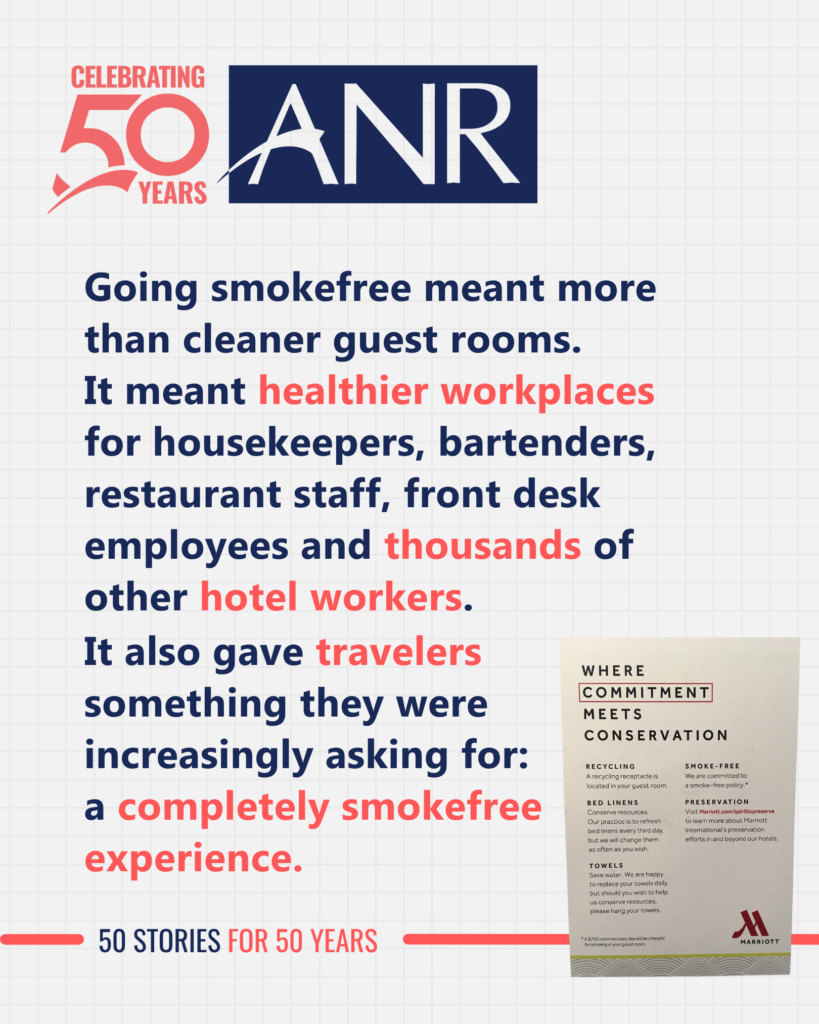
By making their entire indoor environments smokefree, Westin and Marriott provided a better experience for guests and healthier workplaces for housekeepers, restaurant and bar staff, front desk employees, and other hotel workers.
In some communities, a Westin or Marriott lobby bar may have been among the first local bars where customers and workers could experience a smokefree environment. These businesses showed that smokefree hospitality could work.
Speaking Up for Smokefree Hotels Still Matters
Westin knew what guests wanted because people spoke up. They requested nonsmoking rooms, responded to surveys, wrote notes to management and complained about indoor smoking. That feedback became part of the business case for change.
ANR members can still make a difference this way.
When a hotel, restaurant, casino, or other business provides smokefree air, mention it in a survey or online review. Let the business know that smokefree air affects where you choose to spend your money. When secondhand smoke is a problem, say that too.
Businesses need to hear from customers who value smokefree air. Smoke is smoke whether from a lit cigarette, cigar, cannabis as well as vapor from electronic smoking devices. As legal adult use of cannabis has expanded, secondhand smoke remains a concern for travelers and hotel employees. Your voice as a consumer has power so leave comments and reviews of your experience if exposed to secondhand smoke during a stay.
You can write reviews of hotels and motels on Google, Hotels.com, Booking.com, Travelocity, or TripAdvisor.
Partners helped
Westin worked with the American Legacy Foundation, now Truth Initiative, as it prepared to implement its smokefree policy. Legacy was led at the time by Dr. Cheryl Healton, who today serves on the ANR Foundation Board of Directors. In Westin’s announcement, Cheryl called the policy a “visionary step” for its guests and staff.
ANR and other smokefree partners also helped spread the word and support successful implementation in communities around the country.
Ahead of the curve
The Westin and Marriott smokefree policies were not inevitable in 2006, and even today some other major hotel chains still do not have a consistent brand-wide smokefree policy.
In 2016, Marriott acquired Starwood Hotels & Resorts, bringing Westin into the Marriott family and joining two hotel portfolios that had helped lead the move toward smokefree hospitality.
As ANR celebrates 50 years, we congratulate Westin and Marriott on 20 years of smokefree leadership. Their decisions helped show the hotel industry that listening to customers, protecting workers, and providing smokefree indoor air is good for health and good for business.
Sources: